
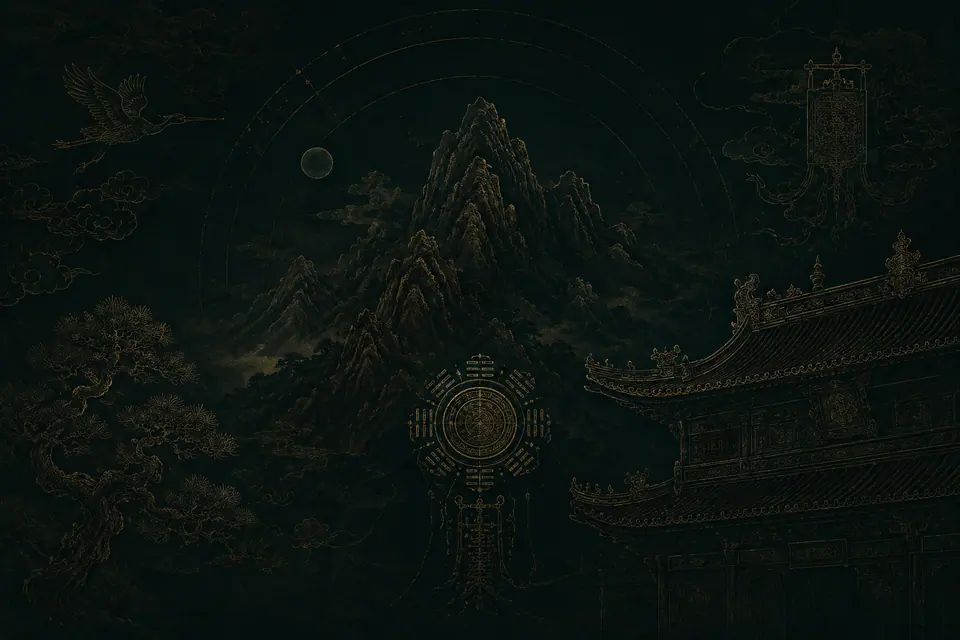
Longhu Mountain is often introduced as a cultural symbol before it is understood as a lived context. A more grounded first step is to see it as a long historical environment where ritual, landscape, scholarship, and everyday discipline have coexisted for generations.
This guide is for readers in Daoist Roots knowledge pages who want to learn respectfully, avoid superficial claims, and connect culture with practical modern practice.
1) What Longhu Mountain represents in Daoist tradition
Longhu Mountain is known for a layered tradition: philosophical lineage, ritual systems, textual influence, and regional cultural continuity. In modern educational use, many people approach it for two reasons:
- Cultural curiosity.
- A desire to connect personal practice with a broader ethical and ecological framework.
A beginner-friendly framing is to treat Longhu Mountain as a cultural ecosystem, not a single doctrine. When people say “Daoist,” they often imagine only occult symbols; in practice the tradition includes ethics, seasonal rhythm, breath work, movement, scholarship, etiquette, and community memory.
2) A practical lens for new learners
The first mistake beginners make is asking for hidden formulas too early. A stable learning order is more sustainable:
- Start with vocabulary basics: key words, symbols, and seasonal logic.
- Observe daily life parallels: schedule, breath, food rhythm, rest rhythm.
- Learn what rituals are public-facing and symbolic.
- Explore specific texts and oral interpretations only when foundational fluency has formed.
This order prevents overwhelm and discourages instant certainty claims.
3) What can be experienced responsibly on-site and online
If you are preparing a real or virtual learning path, include concrete, verifiable layers:
- Landscape context: mountain topography, seasonal weather, quiet spaces, and sound quality impact attention.
- Cultural context: local practice habits, visitor etiquette, and historical references.
- Learning context: guided interpretation versus independent reading, and where interpretation differs by teacher or lineage.
Avoid presenting any one interpretation as the only valid one. Traditional subjects are often preserved through different lineages with different emphasis. That is not a contradiction; it is a cultural reality.
4) A respectful introduction framework
For a beginner article or landing structure, we recommend four checkpoints:
Checkpoint A: Orientation
Give plain terms first. Define practical words before using poetic vocabulary. A person should understand what “Qi,” “harmony,” and “seasonal living” mean in everyday terms.
Checkpoint B: Daily anchor
Offer one or two simple, repeatable practices:
- morning posture reset,
- five-minute breath calibration,
- evening reflection note.
Checkpoint C: Cultural literacy
Introduce a short reading path:
- introductory glossary,
- one essay on ethics,
- one case-based note on modern interpretation.
Checkpoint D: Practical application
Explain how this connects to wellness routines, movement courses, and advisory services without overclaiming.
5) Common misconceptions to correct
- Misconception: Longhu Mountain culture is only ritual.
Correction: It includes discipline, language, art, community rhythm, and embodied practice.
- Misconception: Knowing symbols is equivalent to depth.
Correction: Understanding context matters more than slogan-like familiarity.
- Misconception: Cultural knowledge should immediately change fate.
Correction: It can support reflection, behavior design, and more attentive daily practice.
These three corrections protect readers and preserve trust.
6) How this connects to our content path
A coherent SEO content flow can map from education to action:
- Intro articles: what Longhu Mountain culture means to beginners.
- Practice articles: practical Daoist-inspired routines.
- Tool pages: Five Elements-based self-checks and daily recommendations.
- Course pages: structured classes for breath, movement, and seasonal wellbeing.
- Consultation pages: personalized, non-deterministic cultural interpretation.
For each handoff, keep the same language baseline: beginner accessible, culturally grounded, outcome-safe.
7) Visiting responsibly and learning in public language
If planning in-person visits, readers often ask about etiquette:
- Ask permission before recording.
- Respect photography and sacred boundaries.
- Move from observing to asking; avoid speculative interpretation on site.
- If working with local teachers, acknowledge the distinction between public explanation and private instruction.
This mindset supports collaboration while protecting both user and content integrity.
8) Suggested next steps
For readers who want structure, propose this simple sequence:
- Read this beginner guide.
- Enroll in a Daoist-inspired wellness foundation course.
- Try a cultural interpretation tool for terminology support.
- Join a Daoist cultural consultation for deeper context if needed.
This is not a funnel that promises quick transformation. It is an educational path that builds discernment.
Final note
Longhu Mountain as a cultural learning subject works best when we prioritize clarity over mystery. Treat it as a living source of practice language, historical continuity, and ethical attention to daily life.
If your brand communication stays grounded—beginner-first, evidence-aware and honest, and free of certainty claims—the content will remain sustainable, shareable, and credible.
For more guided entries, return to the Daoist Roots Knowledge Base.
Key Terms
A central place-name for understanding Zhengyi Daoism, Celestial Masters history, and Daoist cultural memory.
A Daoist tradition known for ritual transmission, registers, community rites, and household-facing practice.
Celestial Master; a title and lineage reference associated with Zhang Daoling and Longhu Mountain history.
A formal ritual authorization concept within Daoist religious systems, often misunderstood by beginners.
A chain of transmission, teaching, ritual authority, and cultural memory rather than a marketing label.
Daoist textual sources that preserve cosmology, liturgy, ethics, and practice vocabulary.
A learner who needs careful context before applying historical terms to personal practice.
An educational frame that explains tradition without pretending a short article can replace formal training.
Explore Your Chart
Generate a free Zi Wei astrology chart, read star-by-palace interpretations, and explore AI-assisted reports grounded in traditional Daoist cultural context.
Generate Your Chart →Use this article as one entry in the wider Daoist Roots knowledge archive.
Disclaimer
Daoist Roots articles are for cultural education and reflective learning. They are not medical, legal, financial, or mental health advice, and they do not replace qualified professional guidance.
Source Notes
This article is written for cultural education and beginner orientation. It should be read as context for learning and reflection, not as medical, legal, financial, or deterministic advice.